

Structural Inspection
Our road structure experts help keep the Shuto Expressway safe.
Our road structure experts help keep the Shuto Expressway safe.
To ensure the safe and reliable use of the Metropolitan Expressway, our experienced road structure experts conduct structural inspections as the foundation of all maintenance and management activities. The inspection data we collect is used not only to help prevent harm to road users and the public, but also to support repair and reinforcement design for the Shuto Expressway under demanding operating conditions, as well as long-term maintenance planning.
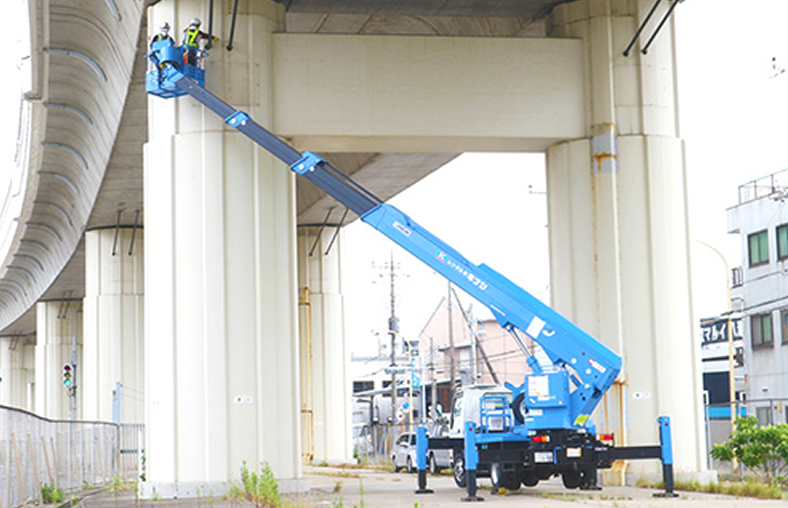
Periodic Inspection
We conduct periodic inspections based primarily on close visual examination to identify damage and abnormalities in structures. When damage or abnormalities are detected, we perform assessments and monitor changes over time to evaluate the overall condition and integrity of the structure.
Periodic Inspection of Bridges
-
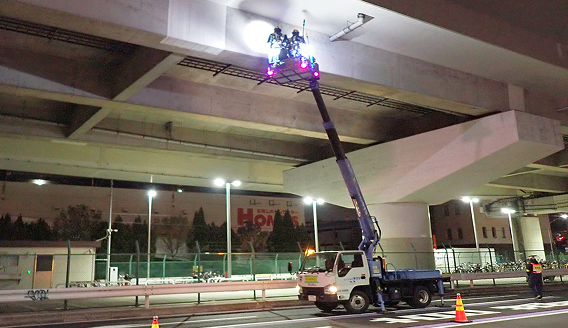
Periodic Inspection of Bridges
Using aerial work platforms and over-fence vehicles (bridge inspection vehicles), we access structures directly and conduct daily inspections to help ensure the safety of expressway users and prevent harm to the public.
Spanning approximately 330 km, the Shuto Expressway is composed of roughly 95% structural assets, including elevated bridges and tunnels, making careful and detailed maintenance essential. -
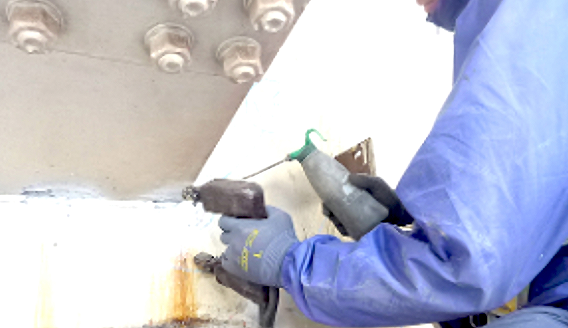
Inspection of Steel Members
One of the most common forms of damage in steel components is fatigue cracking. Many of these cracks are extremely small and cannot be detected with the naked eye, so magnetic particle testing, a type of non-destructive testing, is used for inspection. In addition, ultrasonic testing equipment is used to detect issues such as bolt fractures and other defects.
-
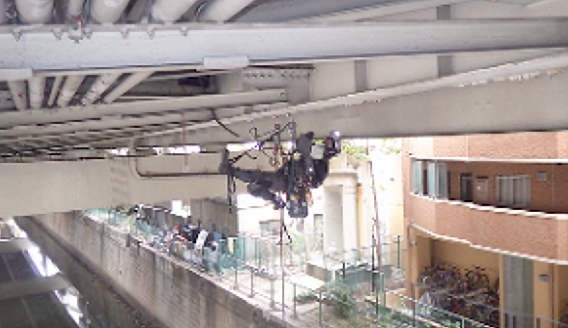
Inspection of Areas Adjacent to Rivers and Buildings
For locations where close-up inspections using aerial work platforms are not possible, such as areas above rivers or in close proximity to buildings, inspections are carried out using rope access techniques.
Periodic Tunnel Inspection
-
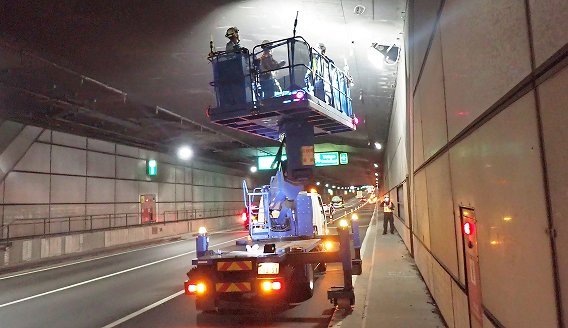
The Shuto Expressway includes tunnels with merging and diverging sections, as well as the Yamate Tunnel, the longest highway tunnel in Japan. Because tunnel inspections can be time-consuming, we use specialized tunnel inspection vehicles to carry out inspections efficiently while minimizing the impact on expressway users.
Periodic Inspection of Earthwork Sections
-
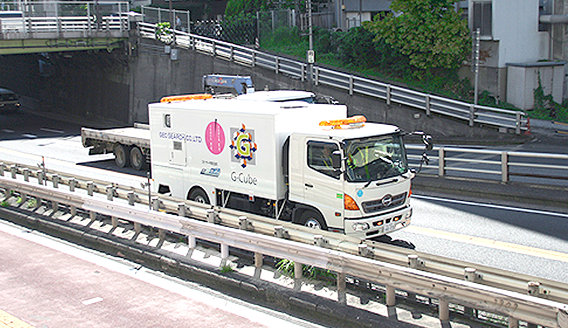
To help prevent road surface subsidence and similar issues, we use specialized vehicles capable of detecting subsurface anomalies to check for cavities and other defects beneath the road surface.
Routine Inspection
Routine inspections are conducted daily, including patrol car surveys along the expressway and on-foot visual inspections from below elevated sections using binoculars, to check for damage or abnormalities in road structures, road surfaces, and ancillary facilities.
Patrol Inspection
-
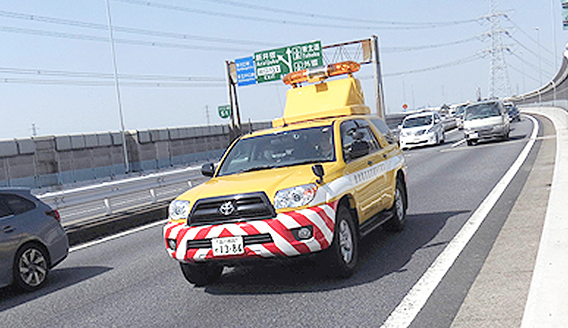
Inspection engineers riding in patrol cars travel along the mainline, on-ramps and off-ramps, and beneath elevated sections to visually identify damage and abnormalities from the vehicle. This enables the prompt detection of hazards to passing traffic—such as fallen objects or road surface defects—helping to maintain the safety of the Metropolitan Expressway.
On-Foot Inspection
-
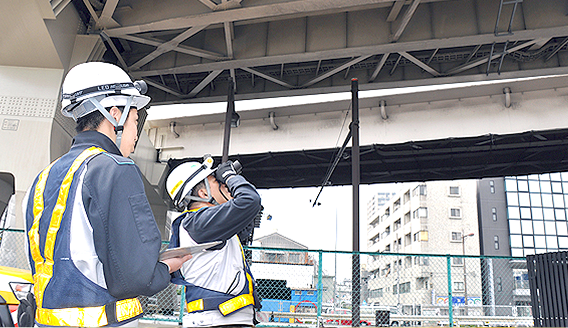
Visual inspections are carried out from below elevated sections using binoculars. In locations where rivers run beneath the elevated structure, inspections are conducted by boat.
Emergency Inspection
In the event of earthquakes, typhoons, or other disasters, or major accidents, emergency inspections are conducted on a 24-hour basis to check for unexpected damage or abnormalities in structures.
Disaster Response Inspection
-
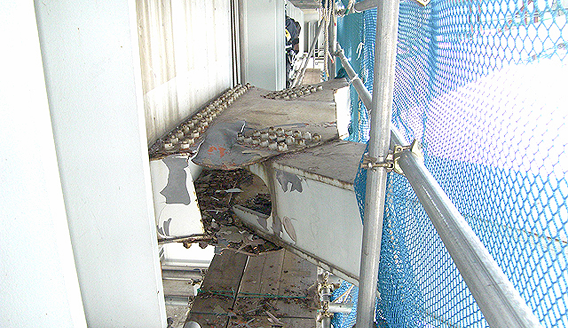
Post-Earthquake Inspection
Following an earthquake, inspections are conducted to check for any unexpected damage or abnormalities in structures.
-
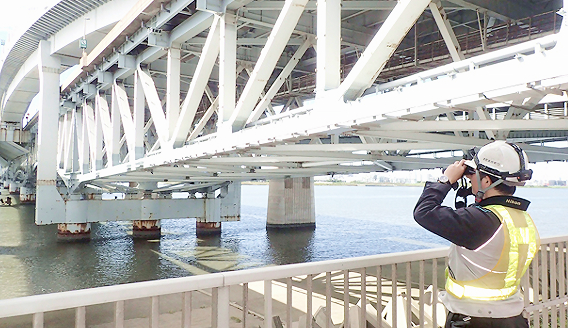
Inspection During High Winds
When the 10-minute average wind speed exceeds 15m/s, inspections are conducted to confirm the road's operational integrity and safety for passing vessels. This includes visual inspection of the road surface from vehicles and binocular inspections from below elevated sections.
-
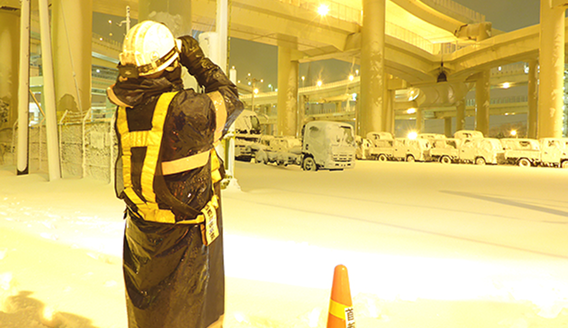
Monitoring and Patrol Inspection for Snowfall Prevention
Fixed-point monitoring and patrol inspections are conducted at locations where snow accumulating on Shutoko Expressway structures could fall and pose a risk of harm to third parties.
Post-Accident Inspection
-
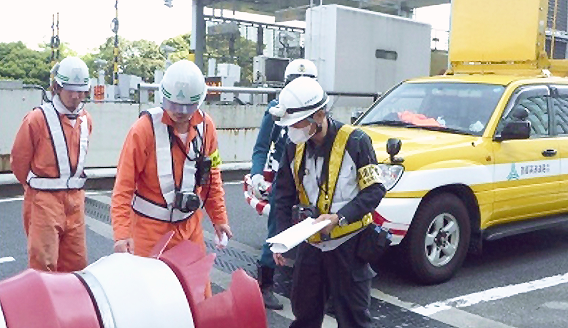
If structures or ancillary facilities are damaged as a result of a traffic accident or fire, emergency inspections are conducted immediately.
Special Structure Inspection
For long-span bridges with complex structures—such as Rainbow Bridge and Yokohama Bay Bridge—and immersed tunnels, regular instrument-based measurements are conducted in addition to close-up inspections to verify structural safety.
Inspection of Long-Span Bridges
-
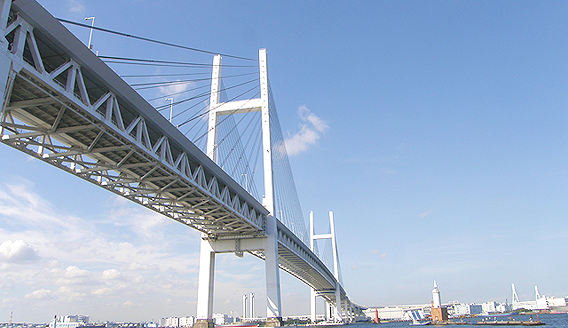
For long-span bridges such as Rainbow Bridge and Yokohama Bay Bridge, periodic measurements such as cable tension testing are carried out.
Inspection of Immersed Tunnels
-
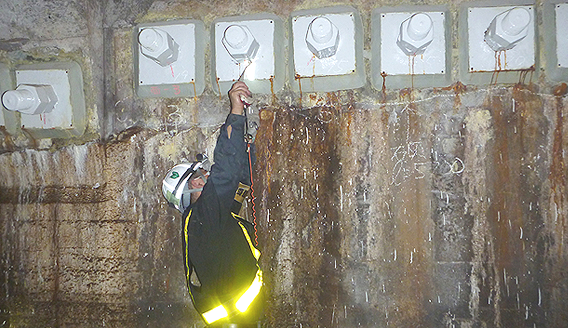
Inspections are conducted on the joints of tunnel elements and cable anchorage points to assess the overall structural integrity of the tunnel. Changes in crack width are tracked using contact gauges.
Building Structure Inspection
Inspections of architectural structures involve the regular monitoring of damage and other conditions using close visual examination and inspection equipment. In addition to percussion and tactile testing, the usage status of buildings is verified and measurements are taken to assess seismic performance, safety, and regulatory compliance.
Inspection of Toll Plazas
-
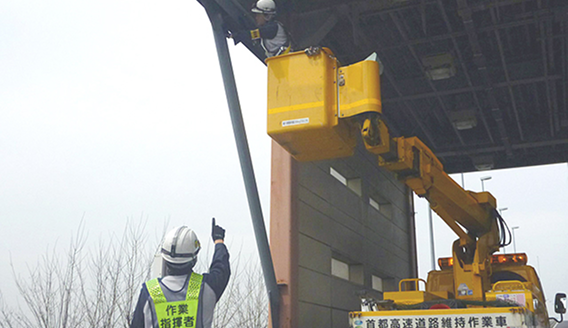
Keeping Facilities in Optimal Condition at All Times
At toll plaza facilities, close-up inspections using aerial work platforms are conducted to maintain facilities in consistently good condition, preventing harm to customers and third parties.
-
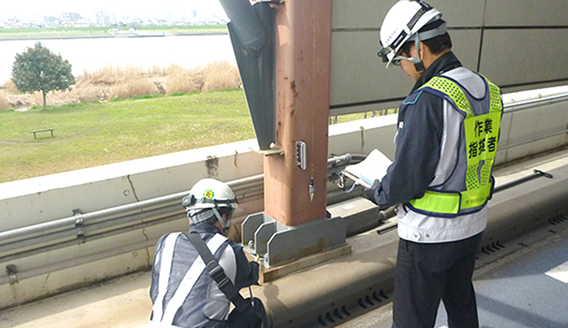
Inspection of Toll Plaza Column Bases
Anchor bolts at toll plaza column bases are inspected by percussion testing using a test hammer, while bolt fractures and similar defects are examined using ultrasonic flaw detection equipment.
-
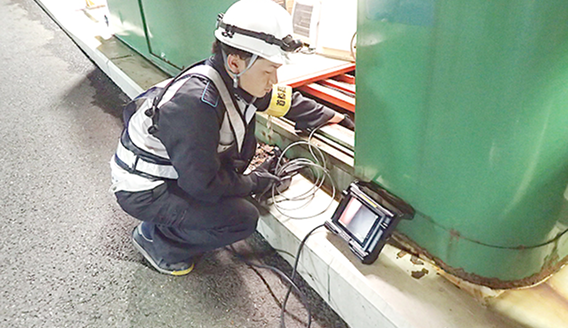
Inspection of Undersides of Toll Collection Booths
As the undersides of toll collection booths are difficult to inspect visually, video scopes are used for these inspections.
Inspection of Parking Areas
-
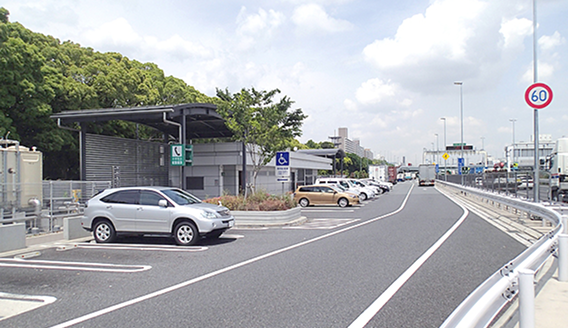
Ensuring Convenience and Safety for Users
As parking area facilities are used by large numbers of the general public, inspections cover not only the facility environment and convenience, but also damage that could lead to harm to customers.
-
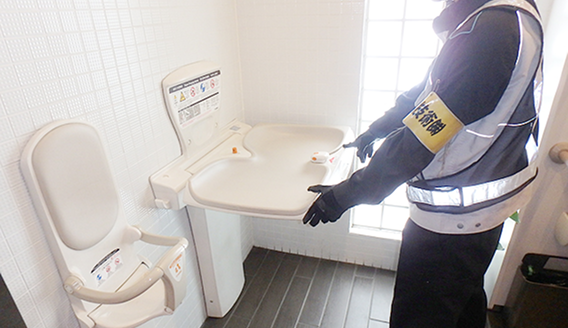
Inspection of Restrooms Requiring High Standards of Comfort
Restroom facilities in parking areas used by customers are subject to thorough tactile inspection.
-
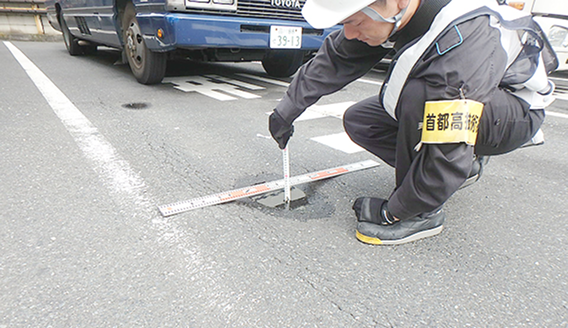
Exterior Inspection of Parking Area Features Including Landscaping and Drainage
During parking area external facility inspections, we check for loose fence mounting bolts, the condition of landscaping, and blockages in parking area drainage inlets.
Ventilation Facilities and Other Buildings
-
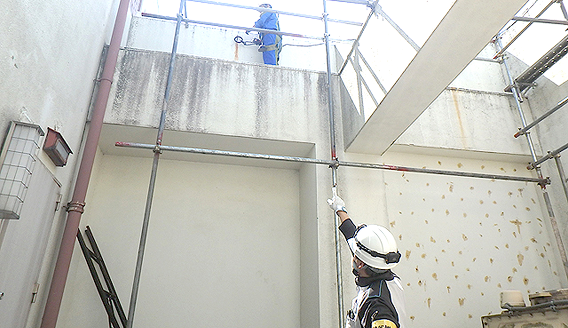
Inspection of Various Facilities That Support Expressway Operations
Buildings and facilities used for the maintenance and management of the Shuto Expressway serve a wide range of purposes, including ventilation facilities, substations, drainage pump stations, and de-icing material storage facilities. These facilities are primarily inspected through close visual observation, and when necessary, non-destructive testing methods such as tactile inspection and percussion testing are also used.
-
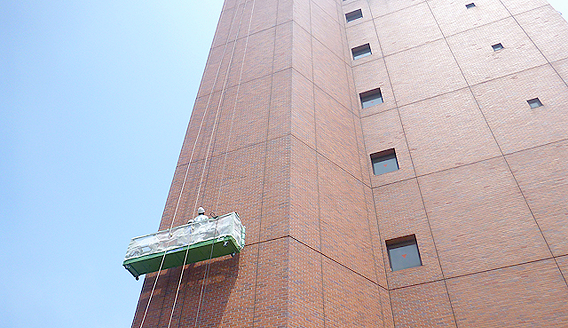
Percussion Inspection of Exterior Walls of Related Buildings
Exterior walls and other surfaces where falling material could harm third parties are inspected using gondola scaffolding and test hammers for percussion inspection, checking for tile detachment, cracking, and similar defects.
Next-Generation Technologies Supporting Social Infrastructure
Maintenance Utilizing GIS (Geographic Information System) and 3D Point Cloud Data
-
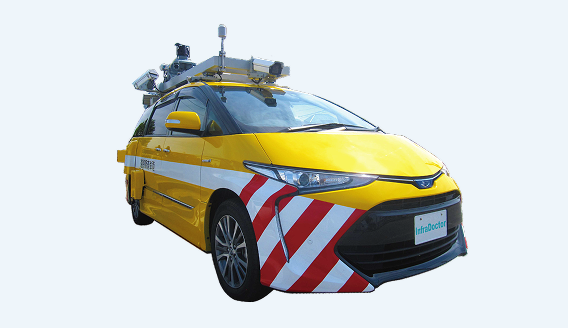
InfraDoctor®
We support various maintenance operations using InfraDoctor®, a maintenance management system that leverages GIS and 3D point cloud data to enable accurate deterioration diagnosis and prediction, as well as timely and appropriate repairs.
Streamlining Maintenance Operations
-
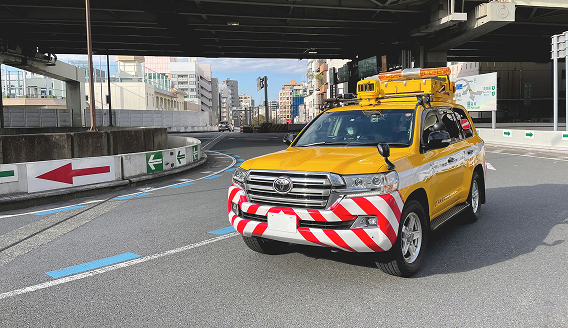
InfraPatrol®
InfraPatrol® is a system that combines map, video, and sensor data to advance and streamline infrastructure maintenance operations, improving the efficiency of patrol inspections and other activities.
Illuminance and Electric Field Strength Measurement
-
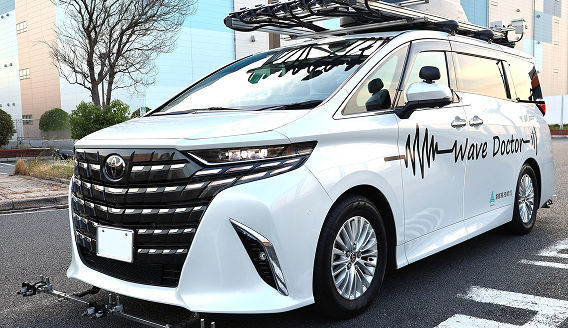
WaveDoctor®
Using a vehicle equipped with a comprehensive suite of measurement instruments for road facilities, illuminance and radio wave measurements are conducted at normal traffic speed without requiring traffic control.